
Amber R. Reed is assistant professor of Global and Diaspora Studies at Spelman College.

Request Academic Copy
Please copy the ISBN for submitting review copy form
Description
List of Illustrations Preface Acknowledgments Glossary of isiXhosa Words Map of South Africa Introduction 1. Being Xhosa, Being South African 2. The NGO as Moral Compass? 3. "Thinking Outside the Box": Sonke in Kamva 4. Life Orientation as Democratic Project 5. Teaching Nostalgia 6. Freedom from Democracy? Appendix Notes Bibliography Index
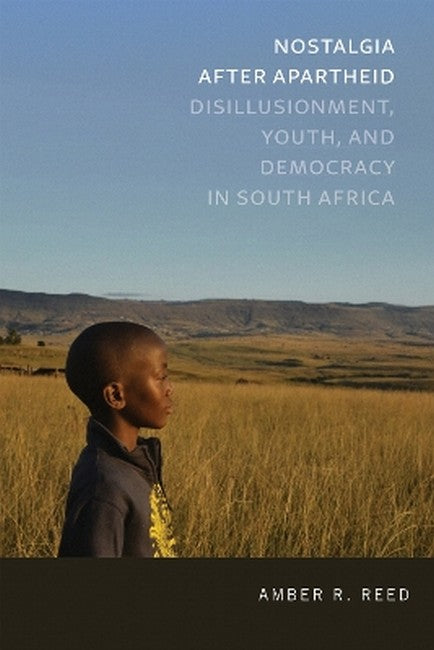
"Amber Reed's Nostalgia After Apartheid examines how the failings of democracy in South Africa are articulated through critiques of cultural liberalism and manifested in debates over culture and tradition. In this nuanced, rigorously researched ethnography, Reed develops a complex set of interlocking arguments that are focused on South Africa but relevant elsewhere." -Anthropology and Education Quarterly "In this well-researched monograph, Amber Reed assesses the effectiveness of both nongovernmental and state-sponsored curricular efforts to educate Black youth on the benefits of liberal democracy, gender equality, and human rights." -Choice "An ethnography that is theoretically informed and eminently teachable." -American Anthropologist "This lucidly written monograph opens new ground, particularly in the study of education and Black conservatism during the post-apartheid era. It also raises a series of crucial questions for future debate."-The Journal of the Royal Anthropological Institute "In this fascinating and beautifully written ethnography on rural life in post-apartheid South Africa, Amber Reed compellingly reveals how the transition from apartheid to liberal democracy has failed the rural youth who now regard the Mandela miracle of 1994 as a betrayal and have developed a bizarre sense of nostalgia for life under apartheid. Nostalgia after Apartheid delivers a significant contribution to the anthropology of southern Africa and to the understanding of the social, cultural, and political meanings of the post-apartheid transition in South Africa." -Leslie J. Bank, co-editor of Migrant Labour After Apartheid "Amber Reed's Nostalgia after Apartheid contributes to important deliberations about a longing for a past that was without doubt oppressive and discriminatory. Yet there is something about 'order' and 'tradition' that generates nostalgia, and Reed is able to convey this well through her ethnographic work." -Monique Marks, author of Transforming the Robocops