
Jordi Pujol is an associate professor of media ethics and media law at the School of Church Communications in the Pontifical University of Santa Croce in Rome. John Durham Peters is the Maria Rosa Menocal Professor of English and of Film and Media Studies at Yale University.

Request Academic Copy
Please copy the ISBN for submitting review copy form
Description
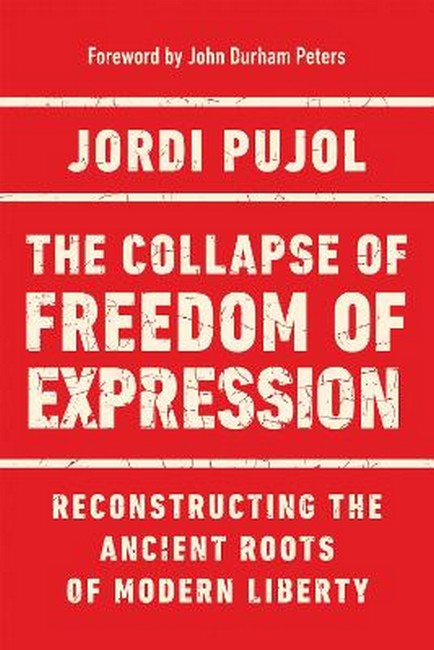
Acknowledgements Foreword by John D. Peters, Yale University Introduction Part 1. Freedom of Expression under Threat: Emblematic Cases 1. I am not Charlie Hebdo. Defending Freedom of Expression but Not Its Content 2. The Paradox of Freedom of Expression on Campus 3. The Threat of Religious Fanaticism: Jyllands Posten and the Regensburg Address 4. The Rise of a New Orthodoxy: The Intolerance of Secular Relativism 5. Facebook's Content Moderation Rule: Private Censorship of Public Discourse Part 2. The Liberal Tradition of Freedom of Expression and Its Contradictions 6. The Sustainability of the Liberal Rationale: Main Critiques 7. A Fabricated Notion of Tolerance 8. The Epistemological Shortfall: A Homogenous Concept of Discourse 9. The Anthropological Shortfall: Modernity's Idea of Mankind 10. The Neutrality of the Public Space: A Useful Fiction Part 3. Historical and Philosophical Development of Freedom of Expression 11. The Origins of Freedom of Expression 12. Old-School and New-School Censorship 13. The Classical Tradition of the Founding Fathers of The United States 14. The Contemporary Tradition in the United States: Holmes and Harvard 15. The European Tradition: Hate Speech Laws Part 4. Reconstructing the Foundations of Freedom of Expression 16. Reframing Freedom of Expression as a Human Good 17. Reconsidering the Legal Grounds 18. Reshaping the Harm Principle. Pragmatics of Language and Natural Ethics 19. Repairing the Relationship Between Secular and Sacred 20. Revisiting the Limits of Freedom of Expression
"Firmly rooted in venerable, even ancient, schools of philosophical and moral thought, The Collapse of Freedom of Expression looks to the future without nostalgia for what is irrevocably in the past. Jordi Pujol is fully open to the unprecedented newness of the historical and social context in which we find ourselves but remains confident that addressing these developments requires a renewal of foundational questions and principles. His book is well worth the attention of all of us who care about the past and the future of freedom of expression, and about the fundamental human goods that it aims to secure." -Paolo Carozza, co-editor of The Practice of Human Development and Dignity "Freedom of speech is under siege today. Unless we relearn its foundations, there is a serious risk that we will lose it. Jordi Pujol reminds us of these foundations and their crucial role in rehabilitating free speech in an age of official and unofficial censorship." -Samuel Gregg, author of Reason, Faith, and the Struggle for Western Civilization