
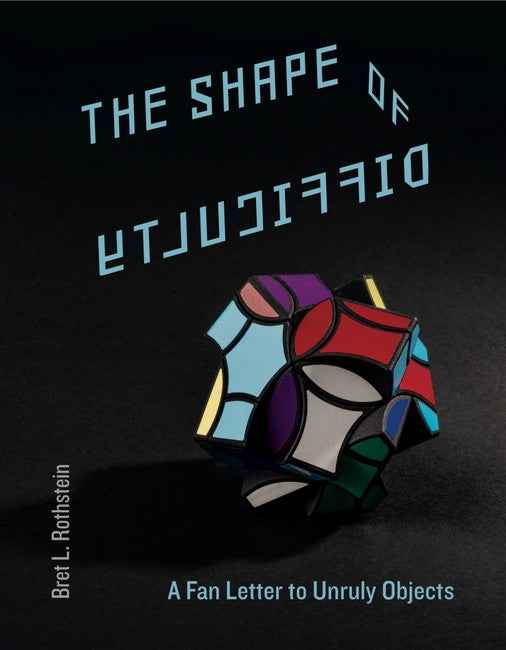

Description
<div>Contents</div><div> </div><div>List of Illustrations</div><div>Acknowledgments</div><div>Some Potentially Useful Terms</div><div> </div><div>Introduction: What We Talk About When We Talk About Difficulty</div><div> </div><div>1 Simplicity and the Perils of Common Sense</div><div> </div><div>2 Complexity and the Problem of Finding Your Way</div><div> </div><div>3 De-emphasis and the Force of Mental Rumor</div><div> </div><div>4 Misdirection and the Question of Interpretive Congruence</div><div> </div><div>5 Subject and Not-Subject in Enigmatology</div><div> </div><div>Conclusion: Why Bother</div><div> </div><div>Notes</div><div>Bibliography</div><div>Index</div>
Reviews
“Embracing difficulty rather than avoiding it, Rothstein reveals a rich landscape of feints and foils, challenging chokepoints and seductive passageways. From classic burr and disentanglement puzzles to elegant puzzle boxes and even more baffling devices, come explore the pleasures of tactility, dexterity, geometry, problem-solving, but also the tantalizing appeal of misdirection and defeat, however temporary. This book will appeal to puzzlers seeking a more sophisticated philosophy of their art form, but also to anyone interested in the scholarship on play and games.”
—Alexander R. Galloway, author of Gaming: Essays on Algorithmic Culture