
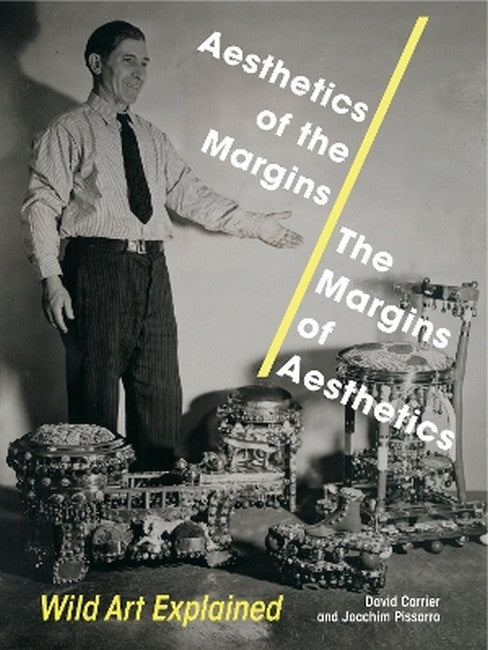
David Carrier retired as Champney Family Professor, a post divided between Case Western Reserve University and the Cleveland Institute of Art. He previously had been Professor of Philosophy at Carnegie Mellon University. His numerous publications include A World Art History and Its Objects, The Aesthetics of Comics, Principles of Art History Writing, all also published by Penn State University Press, as well as Aesthetic Theory, Abstract Art, and Lawrence Carroll. Joachim Pissarro is an art historian, theoretician, and the Bershad Professor of Art History and Director of the Hunter College Art Galleries. He previously served as curator at The Museum of Modern Art and the Yale University Art Gallery. His publication and curatorial projects include Cezanne/Pissarro, Johns/Rauschenberg: Comparative Studies on Intersubjectivity in Modern Art; Jeff Koons: The Painter and the Sculptor; Martin Creed: What's the Point of It?; Joseph Beuys: Set Between One and All; and Notations: The Cage Effect Today.

Request Academic Copy
Please copy the ISBN for submitting review copy form
Description
Contents List of IllustrationsAcknowledgmentsIntroduction1. Modern Foundations of the Art World2. The Classical Model: Dogmatism and Alternative Models of Looking3. Dawn of Modernity4. The Wise, the Ignorant, and the Possibility of an Art World that Transcends This Divide5. The Antinomy of Taste and Its Solution: Variations on a Theme by Duchamp6. The Museum Era7. Institution of Art History8. Art Beyond the Boundaries of the Art World9. The Fluid Nature of Aesthetic Judgments10. Kitsch, a Nonconcept: A Genealogy of the IndesignatableConclusionNotesSelected BibliographyIndex
"Their recurring focus on Kant's "antimony of taste," an evaluation of aesthetic experience as individually unique but also paradoxically anchored to a hope for universal assent, has major implications for the calls for canon revision and new initiatives around diversity and inclusion that presently consume all corners of the "system."" -Katherine Jentleson The Art Newspaper "Carrier and Pissarro present a refreshing argument for aesthetic openness, for the benefit of considering things alien to our social and cultural indoctrination. Their provocative account of the shifting division between the Art World and Wild Art avoids resorting to cultural scandal or moral failure to propel its narrative. The authors merely point out that all cultures-others as well as ours-are exclusionary. Without claiming to rid us of our habits of exclusion, the authors aim to undermine the binary barriers to appreciating aesthetic value: good, bad; high, low; popular, elite. Theirs is a hard-headed, level-headed corrective to politicized accounts that pit one form of aesthetic practice against another." -Richard Shiff, author of Between Sense and De Kooning