
Sarah Burns is associate professor of political science at Rochester Institute of Technology. She is the author of The Politics of War Powers: The Theory and History of Presidential Unilateralism (Kansas, 2019). Robert Haswell is a PhD candidate at Carleton University. He is researching the subject of counterinsurgency within American foreign policy during the Vietnam War and the War in Afghanistan.
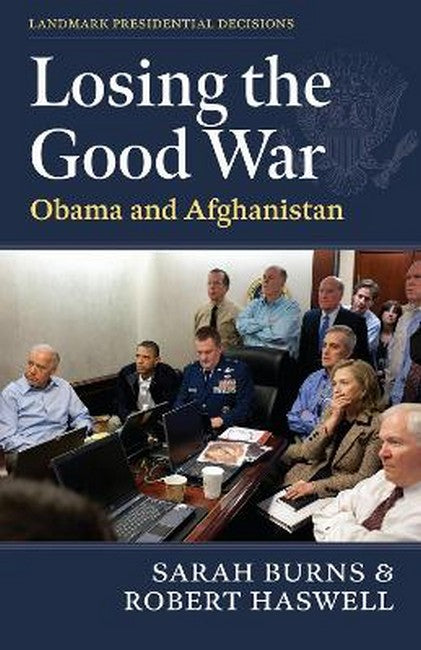

Request Academic Copy
Please copy the ISBN for submitting review copy form
Description
"This concise overview of President Obama's decision making during the Afghan war sheds new light on one of the nation's most controversial conflicts. The authors mastery of issues related to the American presidency, foreign policy making, and the United States military, shines through on every page. Burns and Haswell's account of the involvement of the North Atlantic Treaty Organization in the Afghan war is worth the price of admission alone. I highly recommended this book for courses on the American presidency, military history, foreign policymaking, or for anyone interested in America's longest war."-Stephen F. Knott, author of Rush to Judgment: George W. Bush, the War on Terror, and His Critics "Barack Obama entered the White House promising to win the 'good war' in Afghanistan. But as Sarah Burns and Robert Haswell excellently demonstrate, Obama faced an impossible dilemma. While Americans were weary of the conflict, the trauma of 9/11 remained, and they demanded a successful conclusion to the war. Thus, Obama could not appear soft on terror without suffering political consequences, leading him to rely on military solutions in Afghanistan that were often disconnected from the reality on the ground. For those wondering why Afghanistan became America's longest war, Losing the Good War sheds light on how the pressures of domestic politics and national narratives can constrain even the most powerful leaders."-Tizoc Chavez, author of The Diplomatic Presidency: American Foreign Policy from FDR to George H. W. Bush