
(1509-1564) One of the most influential reformers, his work was of significance throughout Europe and beyond. John Calvin was born in Noyon, France on July 10, 1509. His father was the secretary and attorney for the bishopric of Noyon. Calvin was a brilliant scholar and studied law in Paris, Orleans and Bourges. After what he called a "sudden conversion" at the age of 23, Calvin became a fervent Christian and scholar of the Scripture. Calvin did not immediately break with the Roman Catholic Church, but rather worked toward its reform. His pleas for reform soon brought upon him the hatred of the Catholic Church, and in time he was banished from Paris. Calvin fled to Switzerland, broke with the Catholic Church, and joined with the reformers. In 1536 he published his famous Institutes of the Christian Religion, which was a systematic presentation of the Protestant position. In 1559 he founded what later became the University of Geneva. Here he taught his beliefs to thousands of students who in turn carried "Calvinism" back to their homelands throughout Europe. John Calvin died in Geneva, Switzerland on May 27, 1564.
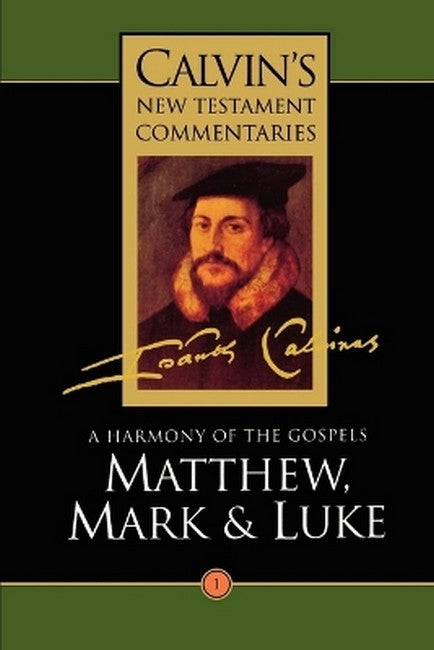

Description
Reviews
J. I. Packer "Here is one of Calvin's finest expositions, done into an admirable English. You will find Calvin, after four hundred years, still as instructive a commentator as anyone." Paul T. Fuhrmann "How many writers today can penetrate, grasp, unfold, and apply the inner spirit of the Scriptures to our lives as Calvin did? We have no indication that Calvin's commentaries have been or are being surpassed in excellence; and to them we still must go for the best that historical Protestantism offers." Jaroslav Pelikan "I have long been convinced that we must begin to take the Reformers at their word and to read them as they wanted to be read, namely, as expositors of Sacred Scripture."