
Thomas Kazen is professor and research chair of biblical studies at Stockholm School of Theology, University College Stockholm. He has authored numerous books and articles in English and Swedish, including Moral Infringement and Repair in Antiquity and Impurity and Purification in Early Judaism and the Jesus Tradition.
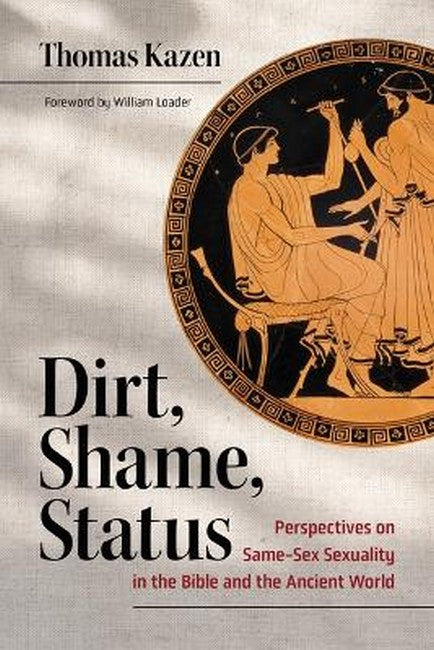

Description
Reviews
"The book is a welcome addition to discussions of LGBTQ+ issues as they relate to the Bible in that it presents an important counterbalance to queer readings of texts about sexuality." --Interpretation "Written for a wider readership and richly well informed and informative, this is a splendid resource on issues widely misunderstood and contentious." --The Expository Times "Kazen's work here is wide-ranging, detailed, and presents an overall compelling case that, by all rights, should affect how the Bible is interpreted on same-sex sexuality." --Theology "Although much of the ground covered here will be familiar to biblical scholars, classicists, and ethicists, what makes this book especially powerful is its relentless insistence on the sheer strangeness of the past. How can ancient scriptures guide contemporary faith and ethical life? If readers have never grappled seriously with the complexity of that question, this book will make it impossible to downplay it any longer." --Wesley Hill, associate professor of New Testament, Western Theological Seminary "With his broad expertise in biblical studies, but also in cognitive research and evolutionary biology, Kazen has a perfect background to write a book on same-sex sexuality in antiquity with a special focus on biblical traditions. The result is an insightful and convincing study. No special prior knowledge of biblical texts is required. Instead, the reader is gradually introduced to the historical-critical perspective that is characteristic of modern biblical scholarship. It is clear that a reading of the material from a modern perspective is completely misleading. Instead, one needs to understand ancient values about sex, not only regarding same-sex sexuality but sexual relationships in general. Kazen shows how norms around sex are largely about confirming hierarchies and power structures in relationships between people and in society at large. This is a brilliant book that offers a fascinating read about same-sex sexuality in the ancient world." --Cecilia Wassen, associate professor of New Testament exegesis, Uppsala University