
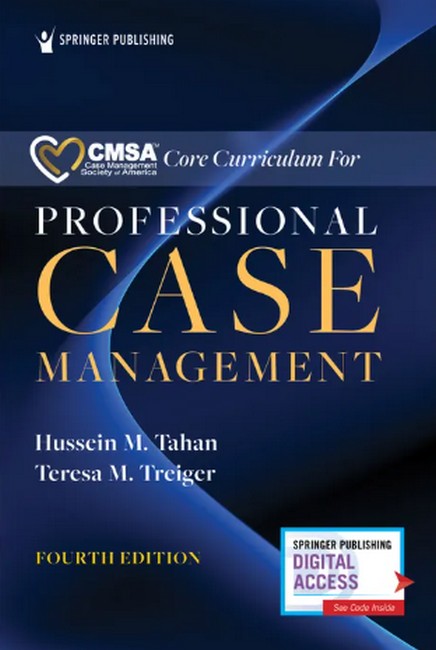

Section I: The Foundation of Case Management Practice
Chapter 1. Introduction to the CMSA Core Curriculum for Case Management
Chapter 2. History and Evolution of Case Management Practice
Chapter 3. Health Care Insurance, Benefits, and Reimbursement Systems
Section II: Case Management and the Health Care Continuum
Chapter 4. Case Management Practice Settings and the Continuum of Care
Chapter 5. Case Management in the Acute Care Setting
Chapter 6. Case Management in the Community and Postacute Care Settings
Chapter 7. Case Management in the Home Care Setting
Chapter 8. Case Management in the Palliative and Hospice Care Settings
Chapter 9. Case Management in the Remote and Rural Care Settings
Section III: Roles, Functions, and Essential Practice Considerations for Case Managers
Chapter 10. The Roles, Functions, and Activities of Professional Case Managers
Chapter 11. The Case Management Process
Chapter 12. Transitional Care and Case Management
Chapter 13. Resource Allocation and Utilization Management
Chapter 14. Transitional and Discharge Planning
Chapter 15. Use of Effective Case Management Plans
Chapter 16. Case Management and Use of Technology
Chapter 17. Professional Case Manager’s Role Leadership and Accountability
Section IV: Professional Obligations in Case Management
Chapter 18. Professional Development, Certification, and Accreditation in Case Management
Chapter 19. General Ethics Standards and Case Management Practice
Chapter 20. Ethical Use of Case Management Innovation and Technology
Chapter 21. Legal Considerations in Case Management Practice
Chapter 22. Quality and Outcomes Management in Case Management
Section V: Select Specialty Practices in Case Management
Chapter 23. Behavioral Health and Integrated Case Management
Chapter 24. Worker’s Compensation Case Management
Chapter 25. Disability and Occupational Health Case Management
Chapter 26. Life Care Planning and Case Management