
Andrew P. Johnson, PhD, is Professor of Literacy Instruction and Distinguished Faculty Scholar at Minnesota State University, Mankato. A former elementary classroom teacher for 9 years, he is the author of numerous books and over 50 book chapters and academic articles related to literacy, learning, and the human condition. Dr. Johnson is a managing editor of the Journal of Equity and Social Justice in Higher Education, the host of the podcast The Reading Instruction Show, and the facilitator of the International Literacy Educators Coalition. His website is www.teaching-reading.com.

Request Academic Copy
Please copy the ISBN for submitting review copy form
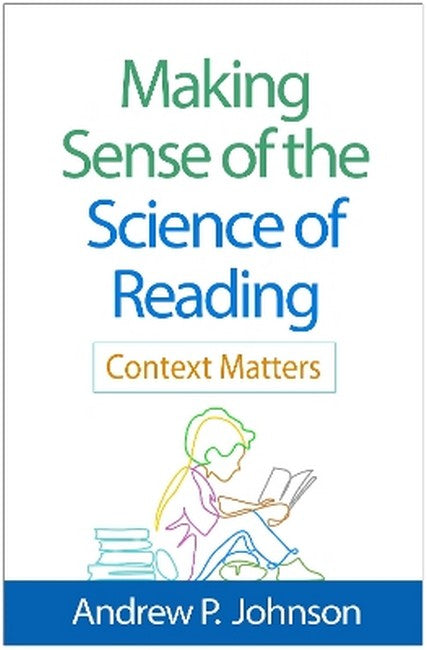
Description
Preface I. Understanding the Problem 1. What Is the Science of Reading? 2. Context Matters 3. A Crisis in Reading That IsnaEUR (TM)t II. Understanding Research 4. Understanding Science, Research, and Research Methods 5. Understanding Theories 6. Understanding Evidence-Based Instruction and Whole Language 7. Understanding Paradigms 8. Becoming a Responsible Consumer of Educational Research III. Understanding the Reading Process 9. Word Activation and Semantic Connections 10. Cognitive Science, Reading, and Orthographic Mapping 11. Three Cueing Systems and the Three-Cueing System 12. Research to Support the Three-Cueing System 13. Applying the Research 14. Children of the Code IV. Understanding Reading Instruction 15. Using Direct and Explicit Instruction to Teach Skills in Reading 16. The Glorious Music of Balanced Literacy Instruction 17. What Dance Can Teach Us about Reading Instruction 18. Phonemic Awareness, Time, Magic, and the Challenge V. Understanding Assessment--and the Greater Context 19. Criterion-Referenced Tests, Norm-Referenced Tests, Academic Performance StandardsaEUR"and Miracles 20. Teaching and Teachers 21. Epilogue: Education Sciences Reform Act of 2002 Appendix References Index
aEURoeThe problem with making reading, instruction, or related policies simple is that it requires cutting corners on details that matter for children and their teachers. What Johnson does instead is make things plain--plain enough for anyone to understand and for everyone to identify some common ground.aEUR--Rachael Gabriel, PhD, Department of Curriculum and Instruction, Neag School of Education, University of Connecticut -