
Lisa Marie Cacho is Associate Professor in the Department of American Studies at the University of Virginia and author of Social Death: Racialized Rightless and the Criminalization of the Unprotected

Request Academic Copy
Please copy the ISBN for submitting review copy form
Description
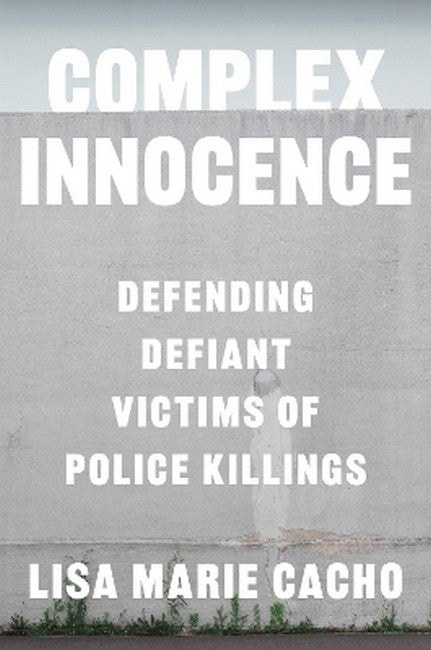
"Powerful, stark, and beautifully written, Lisa Cacho's Complex Innocence considers how the presumption of innocence - and its refusal - functions legally, culturally, and politically within militarized police brutality against Black, Brown, and Indigenous victims. With Indigenous dispossession centered as a structuring rationale for the racial, gendered, and colonial production of policing self-defence, Cacho painstakingly, and with brilliant grace, demonstrates how innocence is denied victims of police killings. Cacho confronts the fullness of the lives lost in their deadly encounter with police, and in each case study, offers us possible otherwises against structures of harm. This book is a must read to understand the exacting cruelty of US policing, compliance, and law." - Jodi A. Byrd Chickasaw Nation, author of Transit of Empire: Indigenous Critiques of Colonialism "Complex Innocence is simultaneously a radical storytelling, archival close reading, and counter-interrogation of U.S. policing. Lisa Marie Cacho raises the stakes of critical cultural analysis by purposing it toward a rigorous, activist-intellectual interpretation of law and the state, reframing jurisprudence as an insidious extension of police power. This is a book about stories at war with each other: Complex Innocence honors those targeted and stolen by deadly state violence by centering their testimonies, grounded analyses, and historical truth-telling as dynamic sites of knowledge production that resist and confound institutionalized erasure." - Dylan Rodriguez, University of California, Riverside