
Department Chair and Associate Professor Thomas Jefferson University Jefferson School of Pharmacy Philadelphia, Pennsylvania Director, PhD Program, Distinguished Professor, College of Nursing Alumni Endowed Professor, Wayne State University College of Nursing, Detroit, Michigan

Request Academic Copy
Please copy the ISBN for submitting review copy form
Description
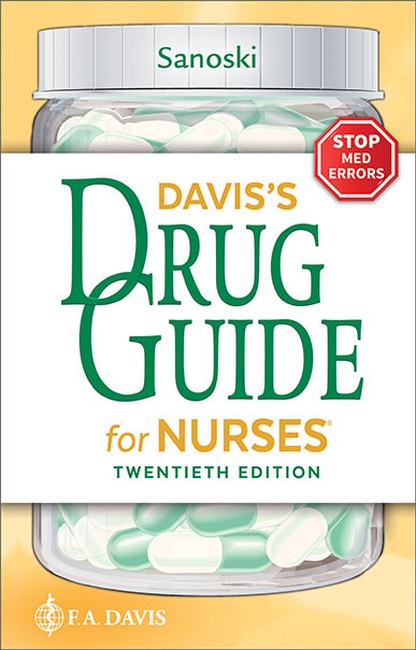
HOW TO USE DAVISS DRUG GUIDE FOR NURSES EVIDENCE-BASED PRACTICE AND PHARMACOTHERAPEUTICS PHARMACOGENOMICS MEDICATION ERRORS: Improving Practices and Patient Safety DETECTING AND MANAGING ADVERSE DRUG REACTIONS OVERVIEW OF RISK EVALUATION AND MITIGATION SYSTEMS (REMS) SPECIAL DOSING CONSIDERATIONS The Pediatric Patient The Older Adult Patient Females of Reproductive Potential Renal Impairment Hepatic Impairment Heart Failure Body Size Drug Interactions THE CYTOCHROME P450 SYSTEM: What Is It and Why Should I Care? EDUCATING PATIENTS ABOUT SAFE MEDICATION USE CLASSIFICATIONS Anti-Alzheimers agents Antianemics Antianginals Antianxiety agents Antiarrhythmics Antiasthmatics Anticholinergics Anticoagulants Anticonvulsants Antidepressants Antidiabetics Antidiarrheals Antiemetics Antifungals Antihistamines Antihypertensives Anti-infectives Antineoplastics Antiparkinson agents Antiplatelet agents Antipsychotics Antiretrovirals Antirheumatics Antituberculars Antiulcer agents Antivirals Bone resorption inhibitors Bronchodilators Central nervous system stimulants Corticosteroids Hormones Immunosuppressants Laxatives Lipid-lowering agents Opioid analgesics Sedative/hypnotics Skeletal muscle relaxants Thrombolytics Vascular headache suppressants Weight control agents DRUG MONOGRAPHS IN ALPHABETICAL ORDER BY GENERIC NAME DRUGS APPROVED IN CANADA NATURAL/HERBAL PRODUCTS MEDICATION SAFETY TOOLS APPENDICES Appendix A. Recent Drug Approvals Appendix B. Ophthalmic Medications Appendix C. Medication Administration Techniques Appendix D. Administering Medications to Children Appendix E. Formulas Helpful for Calculating Doses Appendix F. Pediatric Dosage Calculations Appendix G. Normal Values of Common Laboratory Tests Appendix H. Controlled Substance Schedules Appendix I. Equianalgesic Dosing Guidelines Appendix J. Food Sources for Specific Nutrients Appendix K. Insulins and Insulin Therapy Appendix L. Differences in U.S. and Candaian Pharmaceutical Practices Appendix M. Routine Pediatric and Adult Immunizations Appendix N. Combination Drugs (fadavis.com) BIBLIOGRAPHY COMPREHENSIVE GENERIC/TRADE/CLASSIFICATIONS INDEX
SEE WHAT STUDENTS & PRACTITIONERS ARE SAYING ONLINE ABOUT THE 19TH EDITION
Great for Nursing Students. “This book has helped me so many times in clinicals. It is very detailed and great quality. Highly recommend!”—Stephanie L.
Keeping up. “A must have for all nurses. Gotta keep up with new meds.—Annette F.
A must-have resource! “Amazing resource especially for nurses or nursing students! I thought I wouldn’t need one before I started nursing school and immediately ordered one!”—Laci P.
Clear, organized, and reliable—great for nursing students and quick drug lookups. "A must-have for nursing students and professionals. It’s clear, well-organized, and easy to reference during clinicals or study sessions. The drug information is up-to-date and concise, and I appreciate how it includes nursing considerations for each medication. Definitely worth it—very helpful and reliable resource!—Dwayne M.
Pharmacology Necessity “If you are in nursing school or healthcare, it will definitely be a help. Don’t trust Google and just get this book. Has def provided background information that my professors haven’t mentioned in lecture, wasn’t in the [text]book, but was a question on my homework or exams.”—Online Reviewer
Great for Nursing Students. “This book has helped me so many times in clinicals. It is very detailed and great quality. Highly recommend!”—Stephanie L.
Keeping up. “A must have for all nurses. Gotta keep up with new meds.—Annette F.
A must-have resource! “Amazing resource especially for nurses or nursing students! I thought I wouldn’t need one before I started nursing school and immediately ordered one!”—Laci P.
Clear, organized, and reliable—great for nursing students and quick drug lookups. "A must-have for nursing students and professionals. It’s clear, well-organized, and easy to reference during clinicals or study sessions. The drug information is up-to-date and concise, and I appreciate how it includes nursing considerations for each medication. Definitely worth it—very helpful and reliable resource!—Dwayne M.
Pharmacology Necessity “If you are in nursing school or healthcare, it will definitely be a help. Don’t trust Google and just get this book. Has def provided background information that my professors haven’t mentioned in lecture, wasn’t in the [text]book, but was a question on my homework or exams.”—Online Reviewer