
Bat Tree Habitat Key is an entirely altruistic collaborative project that has been running since 2010. The project objective is to provide an identical detailed account of how each bat species exploits trees as roost sites. This is achieved by data review, collection and analysis within a standardised format, as well as the collection of photographic accounts, which may be contributed by anyone, and are made publicly available for everyone (see www.battreehabitatkey.co.uk and an associated Facebook page). Regardless of political upheaval, the egalitarian nature of Bat Tree Habitat Key combined with the active encouragement of criticism, continues to foster a sense of camaraderie between naturalists of all levels and walks of life across Europe, and the wider world.
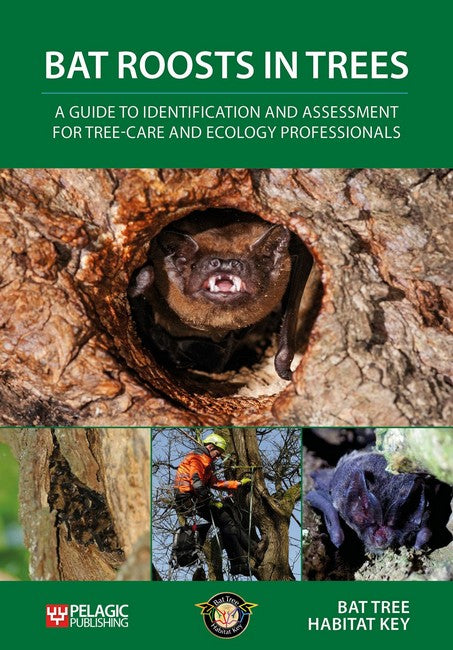

Description
Ch 1. Rationale -Introduction -Pre-existing published advice -Motivation -Objective -Proportionality Ch 2. Tree-Roosting Bats -Tree-roosting bat species -Wooded habitat and tree species -Sensitivity to isolation -Seasonal tree-roost occupancy and roost size -Roost heights -General tree-roost preferences Ch 3. Potential Roost Features -Introduction -The Disease and Decay PRF -The Damage PRF -The Association PRF Ch 4. Intelligence-Gathering -Introduction -Resources -Collation of the results Ch 5. The Desk-Study -Introduction -The desk-study objective -The test of 'reasonable likelihood' -To survey or not to survey Ch 6. Ground-Truthing -Introduction -Ground-truthing method -Ground-truthing interpretation Ch 7. Choosing Surveillance Methods -Introduction -Close-inspection -Remote-observation -Static-netting -Radio-tracking -Putting it all together -The proportionality text Ch 8. Close-Inspection -Introduction -Equipment -Health and Safety -Close-inspection method -Interpretation Ch 9. Remote-Observation -Introduction -Confounding factors -Equipment -Health and Safety -Remote-observation method -Interpretation Ch 10. Static-Netting -Introduction -Equipment -Health and Safety -Static-netting method -Interpretation Ch 11. Surveillance Effort -Introduction -Detectability variables -Surveillance periods and intensity therein Ch 12. Trouble-Shooting -Introduction -Fundamental principles -Inconclusive and 'null' results -Indirect damage and disturbance -Comparative assessment of environment -Late commissions -Unlicensed assessments -Getting a second-opinion -Fault-finding