
Kayleigh Fawcett Williams is a wildlife ecologist and thermographer with a PhD in bat bioacoustics. She has worked in academic, consulting and volunteer sectors, and her career with wildlife has brought her into contact with a diverse range of species around the world. She now shares her expertise through training, consulting and support work at Wildlifetek.
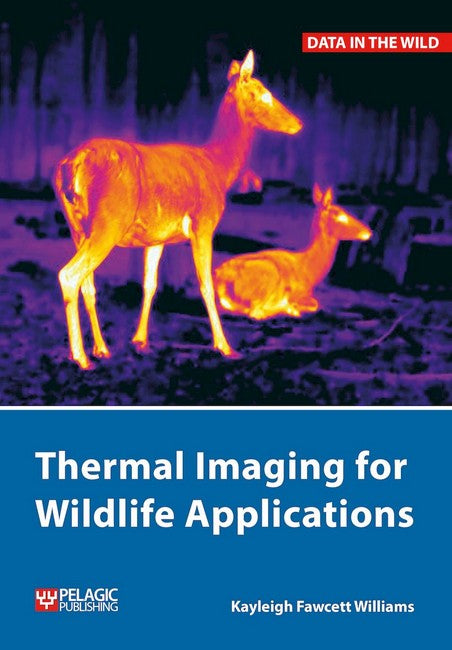

Description
Contents List of Figures Preface Acknowledgements 1. Introduction 1.1 How it works 1.2 History of thermal imaging for wildlife applications 1.3 Advantages of using thermal imaging 1.4 Challenges and limitations of thermal imaging 2. Foundations 2.1 Setting the thermal scene 2.2 Detectability 3. Methods 3.1 Operations workflow 3.2 Levels of use 3.3 Deployment methods 3.4 Combining techniques 3.5 Expertise requirements 4. Equipment 4.1 Important specifications for device selection 4.2 Accessories 4.3 Calibration 5. Application Types 5.1 Detection, classification and counting 5.2 Human-wildlife interactions 5.3 Behavioural studies 5.4 Health and rehabilitation 5.5 Thermoregulation, thermal biology and thermal ecology 5.6 Communication, education and awareness 6. Wildlife Applications 6.1 Mammals 6.2 Birds 6.3 Bats 6.4 Marine mammals 7. Future Possibilities 7.1 Further development of thermal-imaging technologies 7.2 Automation 7.3 Data storage and handling 7.4 Sustainability Appendix Tables Resources Supplier Directory References Index
Reviews
I found the book delightful, engaging, informative, and an overall wonderful reference. It would be of interest to anyone who is either considering, or ready to begin using thermal imaging technology. It's not only a unique resource on the subject, but an impressive technical reference, which one can come back to again, and again. -- Al Milano * Bat Detecting Blog * A comprehensive guide to the use of thermography in animal research... Essentially, this is technical book for someone who is considering thermal imaging in their research programme and is planning their work with animals that are difficult to find with conventional surveys. However, this book is also useful for those who wish to use their equipment more effectively and for those naturalists who want an accessible insight into the world of thermal imaging. -- David Skydmore * BNA News Bulletin * The author has successfully and concisely summarised all the latest knowledge into a valuable and easily understood publication that will no doubt increase the uptake of this technology. A highly recommended read. -- Clive Herbert * London Naturalist Newsletter * This book will be useful for those starting out on the use of thermal imaging for the study of wildlife... [there is] a gold mine of information and data. -- Richard Sale * IBIS *