
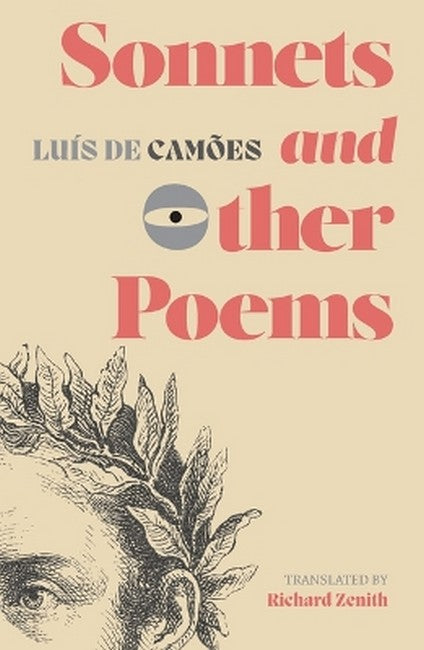
Luis De Camoes (1524?-1580) lived a life full of love and adventure on three continents. His experiences are vividly woven into his poetry,which drew its formal inspiration from Virgil, Ovid, Petrarch and other poets, both classical and modern. A conceptualizing artist, Camoes's extraordinary ability to forge his thought and experience into verses at once crystalline and compelling accounts for his status as one of the foremost poets in the European tradition. While The Lusiads (1572), his epic poem celebrating Portugal's maritime exploits, brought him immediate and enduring renown (there are more than fifteen translations of the work into English), his equally splendorous lyric poetry may hold more appeal for today's reader. Richard Zenith, a long-time resident of Portugal, has won prizes from the PEN Club and the Academy of American Poets for his translations from the poetry of Portugal's Fernando Pessoa and Brazil's Joao Cabral de Melo Neto. He has published his own poetry in reviews, a book of short stories titled Terceiras Pessoas, and numerous essays.

Request Academic Copy
Please copy the ISBN for submitting review copy form
Description
"Camoes's strength as a sonneteer lies not only in his limpid vocabulary and exquisite sense of cadence, but also in his exploration of the most obscure reaches of human consciousness, especially in the delineation of states of bafflement and anxiety. His technical command is supreme, and his range of stylistic experimentation-whether allegorical, pastoral, or erotic-continually exciting."-Helen Vendler, author of The Ocean, the Bird, and the Scholar: Essays on Poets and Poetry "The great Portuguese poet and nomadic adventurer, Luis de Camoes, is best known in the English-speaking world for The Lusiads, his epic tale of empire-building. Yet his body of lyric poetry is no less skilled and astonishing. Richard Zenith, the brilliantly accomplished translator and scholar, now offers us an utterly vivid and immediate rendering of these lyrics, revealing anew their sustained vitality, psychological and emotional depth, and sheer inventiveness. For all who value the eternal lyric tradition, this collection should prove essential reading."-Michael Palmer