
Dr. Jaime E. Welborn, Ph.D. is an Assistant Professor of Educational Leadership in the School of Education at Saint Louis University, where she also serves as Assessment & Accreditation Coordinator and Educator Certification Officer. She earned a B.S. in Elementary Education and an M.S. in Educational Administration from Southern Illinois University, followed by a Ph.D. in Educational Leadership at Saint Louis University. With more than two decades of experience in public education, including classroom teaching at the elementary and middle school levels, school administration, and graduate-level instruction, Dr. Welborn's scholarly and professional work focuses on Cultural Proficiency, collaborative leadership, teamwork, equity in student outcomes, organizational change, strategic planning, and program evaluation. From 2016 to 2019, she served as Program Director for the largest grant in the history of Saint Louis University's School of Education, awarded by the Saudi Arabian Cultural Mission, to support the implementation of the country's national educational and training policies. She has also applied culturally responsive leadership and educational practices internationally with Brace for Impact in Cap-Haitien, Haiti. Additionally, Dr. Welborn serves as Senior Associate for the Center for Culturally Proficient Educational Practice, providing leadership and consultation to advance equity-focused educational initiatives. In 2018, she founded JWE Education Consulting, LLC, which operates under The Jaime Welborn Group, Concinnity Solutions, and Midwest Collaborative, providing professional learning and leadership-focused consulting to school districts and mission-driven organizations nationwide. Her scholarly contributions include peer-reviewed journal articles, national conference presentations, and the 2022 book, Leading Change through the Lens of Cultural Proficiency: An Equitable Approach to Race and Social Class in Our Schools. Her recent research explores culturally proficient educational practices in public schools across the United States, the influence of Jesuit educational values on inclusive leadership preparation, and the advancement of culturally responsive organizational change. Dr. Welborn's work has been recognized with Saint Louis University's Faculty Excellence for Leadership and Service Award (2023) and the Outstanding Scholarship Award from the School of Education (2024). She resides in Saint Louis, Missouri, with her husband and two daughters. Peter Flores III, Ed.D., is the founder and principal consultant of Praxis Lead Equity, LLC, and a senior associate with the Center for Culturally Proficient Educational Practice (CCPEP). He previously served as the Director of Equity and a board member of the Center for Leadership Equity and Research (CLEAR). With more than 17 years in public education as a teacher and administrator, Dr. Flores is recognized for his leadership in advancing equity, cultural proficiency, and social justice in schools and organizations. He holds an Ed.D. in Educational Leadership from California State University, Fresno. His work includes keynote speaking, consulting, and professional development for educators across California and the United States. He has facilitated cultural proficiency learning for federal and state agencies, county offices, school districts, and universities. He has presented at national conferences, the International Cultural Proficiency Institute, the Institute for Equity in Education, and the Museum of Tolerance's Tools for Tolerance for Educators program. Dr. Flores has contributed to the scholarship of equity-focused leadership through co-authored chapters in IGI Global and articles in the ACSA Leadership journal. His recent presentations at the University Council for Educational Administration (UCEA) highlighted cultural proficiency as a pathway to collective care, well-being, and socially just educational renewal. He also helped design the framework for the ACSA Equity Academy and served on the State Superintendent's Transition Team for Closing the Achievement Gap. In 2023, he earned a Diversity, Equity, and Inclusion Certification from Cornell University. A former Naval Science teacher of NJROTC programs, Dr. Flores was recognized as a Bay Area Teacher of the Year finalist. He later served in administrative roles at the middle school, high school, community school, and district levels, most recently as Director of Student Services of a Joint Union High School District. Before entering education, Dr. Flores served 25 years honorably in the U.S. Navy, retiring as a Command Master Chief. A decorated veteran of multiple operations, he brings the discipline of military leadership together with a transformative vision for equity in education.

Request Academic Copy
Please copy the ISBN for submitting review copy form
Description
Dedication Foreword by Delores B. Lindsey and Randall B. Lindsey Acknowledgements About the Authors Preface Introduction to the Compass Framework for Praxis Part I Chapter 1: Understanding Cultural Proficiency Chapter 2: Living Your Core Values Chapter 3: Transforming Your Practice with a Growth Mindset About the Contributors Part II Chapter 4: Culturally Competent Curriculum Chapter 5: Culturally Differentiated Instruction Chapter 6: Fair and Equitable Assessment Chapter 7: Feedback and Grading Part III Chapter 8: Proactive Classroom Management Chapter 9: Behavioral Interventions Chapter 10: Conflict Resolution and Restorative Practice Chapter 11: Social and Emotional Learning and Student Wellbeing Part IV Chapter 12: Relationships with Students and Their Families Chapter 13: Effective Cross-Cultural Communication Chapter 14: Family-Community Engagement and Projects Chapter 15: Collaborative Professional Partnerships Resources A: Culturally Proficient Lesson Plan B: 30-60-90 Culturally Proficient Teaching Plan C: Culturally Proficient Classroom Management Plan D: PLC Annual Cycle of Continuous Improvement E: Learning Strategies F: Cultivating Praxis Book Study G: Cultural Proficiency Books' Essential Questions H: Letters of Impact References
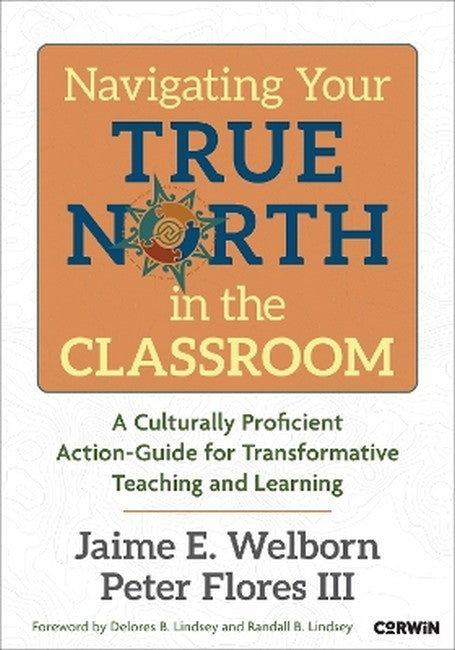
Cultural proficiency is at the core of good teaching. In this important new book Flores and Welborn show teachers how to develop this critical attribute and demonstrate how it can be deployed to make their work with students more impactful. Filled with both practical and conceptual insights, this book is an invaluable resource for educators who want to make a positive difference for ALL of the students they serve. -- Pedro A. Noguera This important book will be useful to all educators who believe with the authors that "teachers who love teaching, teach children to love learning." The framework provided for teachers as well as the emphasis on equity, relationships and trust, and the need to transform both mindsets and practice make this comprehensive volume an essential guide for supporting courageous and committed teachers. -- Carolyn Shields * Wayne State University, Detroit, MI * I recommend this resource for educators who wish to model a growth mindset for their students. As the professional teacher reads through this book alone or with a PLC, she/he can embrace an opportunity to reflect, discuss, and make an action plan. In particular, the continuum of cultural proficiency challenges the teacher to reflect honestly on her/his current teaching habits and worldview. As a teacher with experience in both urban and rural settings, I am aware that I need to continually reflect on my environment for even when I am stationary, my environment may evolve! I will welcome the chance to study this resource on my own and with colleagues to improve our journey toward cultural proficiency. -- Nelly Corbit * Anna-Jonesboro Community High School, Anna, IL * Having worked directly under Dr. Welborn, I have seen the principles of this book in action long before they were captured on these pages. Navigating Your True North in the Classroom is an essential bridge between the "why" of equity and the "how" of daily instruction. By moving beyond abstract theory, it offers a clear, actionable framework that respects the multifaceted demands of the work we do with students daily. The Compass Framework and the deep dive into instructional alignment in Chapter 4 provides meaningful guidance to any educator who is ready to move past checklists and toward a more intentional, student-centered practice. -- Natasha Malone * Educator, St Louis, Missouri * Dr. Welborn and Dr. Flores boldly explore the the Framework for Cultural Proficiency and its application to classroom practice. A much-needed resource in the profession of education, their work dares to address and center the most challenging and sobering element of the work of educators-diversity. Their intentional focus on embracing differences in cultures, backgrounds, families and communities is a refreshing perspective for both veteran and beginning educators. The focus on the three key elements outlined in the text immediately drew me in and held my attention. A must-have for anyone desiring to deepen the impact of pedagogical practice. -- Mike Peoples * School District of University City, University City, MO * As an educator of 20 years, I strongly agree that we, as teachers, are required to chart courses and navigate barriers in classrooms that are shaped by many shifting currents. This can feel hopeless, daunting and unfortunately push teachers out of education entirely due to the lack of resources, support, awareness and tools desperately needed to navigate. I love this book's vivid metaphor for direction, purpose and call to action with the Compass Rose for Transformative Change, as it truly is a visual to guide us toward justice, belonging and a high-quality education. I agree that we, as teachers, are genuinely caring and want our students and families from every cultural background to feel valued, understood, safe to be their true selves and encouraged to further develop their social-emotional learning intelligence. Although we regard these to be our top priorities for our classroom (classroom=family), we often feel pressured to push these goals aside to meet the state and district demands that include, but are not limited to, state testing, growth assessments, rigorous curriculum, etc. A very eye-opening chapter for me was Chapter 4 with its deep, reflective questions regarding curriculum used in the classroom. In my several years of reviewing curricula, it's very easy to heavily focus on the alignment with state standards and lose sight of the importance of noting if it's culturally responsive and relevant, validates students' cultural, linguistic and lived experiences and promotes equity. I found these questions to be extremely powerful when assessing the cultural competency of the curriculum. The Guiding Principles and Inventory are great tools to assess cultural competency, but it can feel quite daunting to learn that you're not utilizing curricula that support this desired environment and outcome. However, the Practical Actions provided, along with the reminder that Cultural Proficiency is a journey, not a destination, gives guidance and ease of mind that awareness is the first step to creating environments that prepares students for the diverse and global world in which we live. This book is a great resource for us, as teachers, to confront our own biases and cultural blind spots. The vignettes in this chapter were very helpful to note my own awareness and/or biases to address areas of growth in my perspective and teaching practices. With this awareness and knowledge, we can redesign our teaching practices to be culturally competent by eliminating behaviors and patterns that negatively impact our students and instead create environments where our students thoroughly thrive. I do believe that we have a powerful impact in the lives of our students, and this book helps to identify and avoid cultural blind spots so we can have healthy, empathetic relationships with our students and their families. I truly believe that there is no higher calling than that of a classroom teacher. I highly recommend this book to educators seeking navigation tools for transformative change toward justice, belonging and a high-quality education for our students (our children). -- Jane Ellen Powers * Bandy Education, IL * Navigating Your True North in the Classroom is an incredibly well written text aimed at transforming the culture of every classroom. The Cultural Proficiency Framework is an impactful tool in the assessment of internal bias that makes cultural competence not only understandable but reachable! Understanding the impact of a dominant culture allows for conscious decision making to address all areas where a lack of culturally proficient protocols, policies, and practices exist. This work stands out in the field of Cultural Equity. -- Joseph Roaldi * Erie 1 BOCES, West Seneca, NY *